
Kitchen calm: how to organize cabinets, pantry, and countertops
The kitchen is often called the heart of the home — and for good reason. It’s where mornings begin, meals are prepared, conversations happen, and daily life unfolds. But when your kitchen is cluttered or disorganized, it can quickly become one of the most stressful spaces in the house.
Overstuffed cabinets, chaotic pantries, and crowded countertops don’t just make cooking harder — they create visual noise, slow you down, and add unnecessary friction to everyday routines.
The good news? You don’t need a full renovation or a picture-perfect pantry to create a calm, functional kitchen. With a few thoughtful systems and a focus on simplicity, you can transform your kitchen into a space that feels effortless to use and easy to maintain.
This step-by-step guide will walk you through how to organize your cabinets, pantry, and countertops so your kitchen works for you, not against you.
Why kitchen organization matters
A well-organized kitchen does more than look good — it supports how you live.
When your kitchen is in order:
You cook more efficiently
You waste less food
You clean up faster
You feel less overwhelmed
You save time searching for items
Most importantly, a calm kitchen creates a calmer home. When everyday tasks feel smoother, the entire rhythm of your day improves.
Step 1: Declutter before your organize
Before introducing any systems, start by clearing out what you don’t need. Organizing too much simply creates neater clutter.
How to declutter your kitchen
Work zone by zone — cabinets, pantry, and drawers — and remove everything before sorting.
As you go, create three categories:
Keep - items you use regularly
Donate - duplicates or items in good condition you no longer need
Discard - broken, expired, or unusable items
What to let go of
Expired pantry goods
Duplicate utensils or gadgets
Appliances you haven’t used in over a year
Chipped or mismatched dishware
Mystery lids with no matching containers
Decluttering creates space — not just physically, but mentally. It allows you to see what you truly use and value.
Step 2: organize cabinets for ease and flow
Cabinets are often where clutter quietly builds up. Items get pushed to the back, stacked awkwardly, or forgotten entirely. The goal is to make everything visible, accessible, and logical.
Group by Function
Start by grouping similar items together:
Plates, bowls, and glassware
Cooking tools and utensils
Baking supplies
Food storage containers
Everyday vs. occasional-use items
Keep items close to where they are used. For example:
* Store plates near the dishwasher for easy unloading
* Keep cooking utensils near the stove
* Place glasses near the fridge
Maximize vertical space
Cabinets often have unused vertical space. Make the most of it by using:
Shelf risers for plates or mugs
Stackable bins
Hooks for mugs or measuring cups
Make it easy to maintain
Avoid overfilling shelves. Leave a little breathing room so items can be returned easily.
Pro Tip: If you have to move three things to reach one item, the system needs simplifying.
Step 3: Create a functional pantry system
The pantry is one of the most used — and often most chaotic — areas of the kitchen. A well-organized pantry makes meal prep faster, grocery shopping easier, and food waste far less likely.
Start with a full reset
Remove everything from your pantry and group items into categories:
Grains and pasta
Snacks
Baking supplies
Canned goods
Breakfast items
Condiments
Asian ingredients
Western ingredients
Use clear, simple storage
You don’t need dozens of matching containers, but a few thoughtful additions can make a big difference:
Clear bins for grouping categories
Airtight containers for dry goods like flour, rice, and cereal
Lazy Susans for oils, sauces, or jars
Shelf risers for canned goods
Visibility is key. When you can see what you have, you’re far more likely to use it.
Check out our Guide to Organizing Products where we share our favorite organizing products!
Label where it helps
Labels aren’t about aesthetics — they create clarity.
Use simple labels such as:
“Snacks”
“Breakfast”
“Baking”
This makes it easier for everyone in the household to find and return items.
Keep it realistic
Your pantry should reflect how you actually shop and cook. If your family relies heavily on snacks, create an easy-access snack zone. If you cook frequently, prioritize ingredients over storage containers.
Pro Tip: Leave a little empty space in your pantry — it allows flexibility and prevents overflow.
Step 4: Clear and simplify countertops
Countertops are where clutter becomes most visible. Even a few extra items can make the entire kitchen feel busy and overwhelming.
The goal is not empty counters — it’s intentional ones.
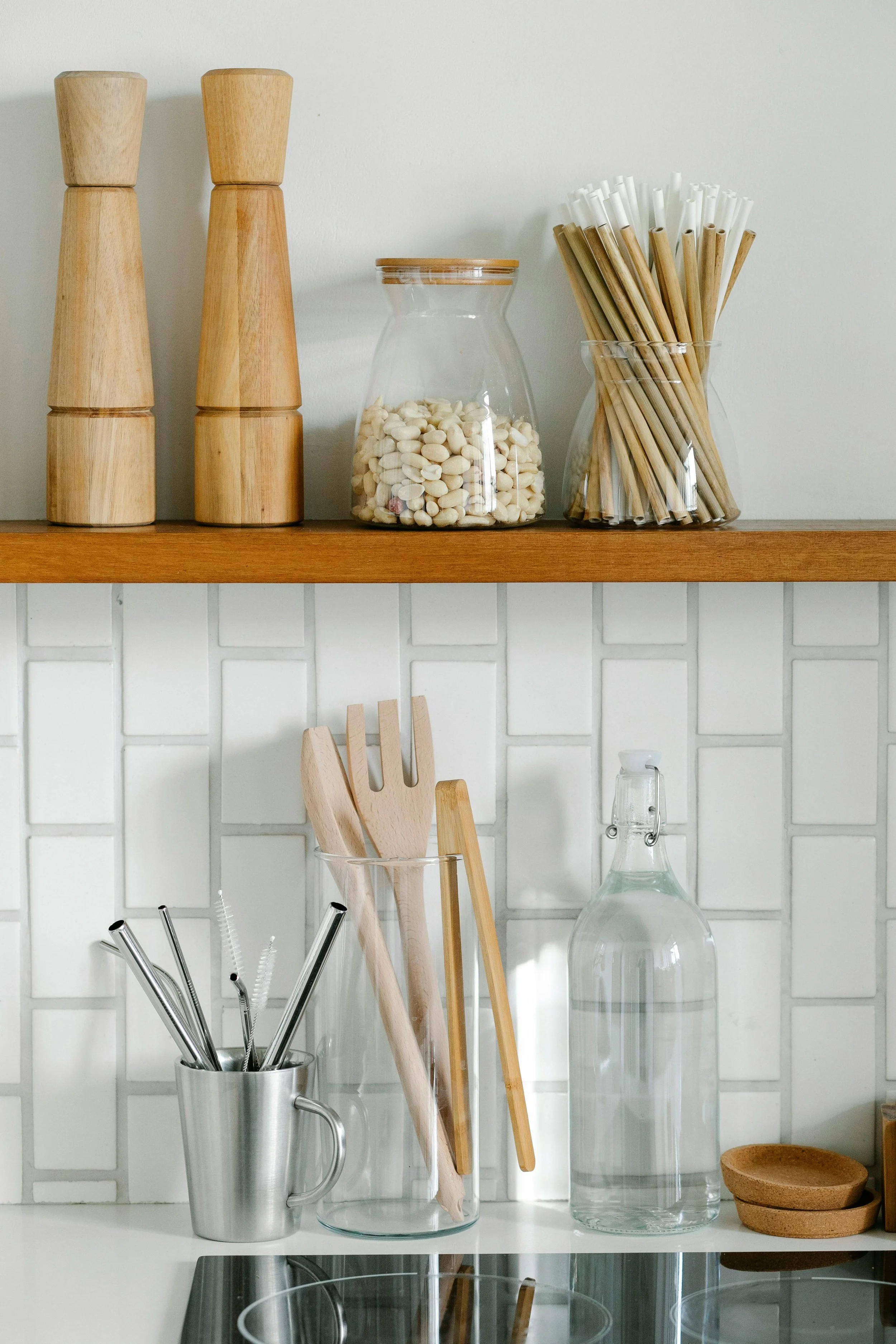
Keep only daily essentials
Limit your countertops to items you use regularly, such as:
Coffee machine or kettle
Toaster
A fruit bowl
A small tray for oils or cooking essentials
Everything else should have a home inside cabinets or drawers.
If you would like tips and tricks to tackle your cabinets, we share our top 5 space-saving solutions for kitchen cabinets in this blog post!
Use trays to contain items
Grouping items on a tray instantly creates a sense of order. For example:
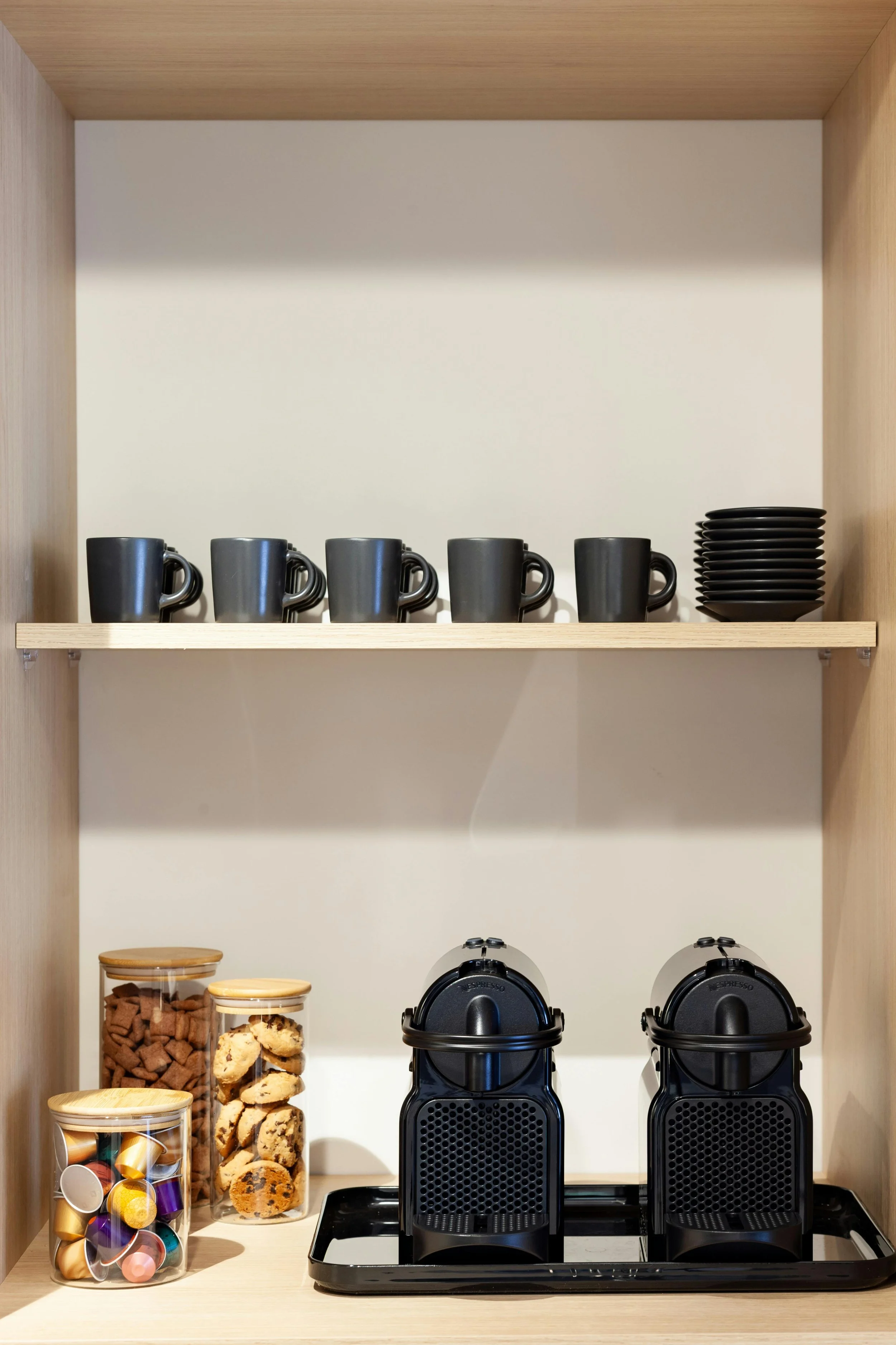
A coffee station tray
A cooking essentials tray (oil, salt, pepper)
A small catch-all tray for keys or mail
Trays create boundaries and prevent items from spreading.
Eliminate “Drop Zones”
Countertops often become dumping grounds for:
Mail
School papers
Bags
Random household items
Create alternative homes for these items elsewhere in the house to keep your kitchen clear.
Step 5: Set up zones that support your routine
One of the most effective ways to create a calm kitchen is to organise it into zones based on how you use the space.
Common kitchen zones
Cooking Zone: pots, pans, utensils, oils, spices
Prep Zone: knives, cutting boards, mixing bowls
Cleaning Zone: dish soap, sponges, dishwasher tablets
Pantry Zone: food storage and dry goods
Breakfast Zone: coffee, tea, cereal, mugs
When everything is stored near where it’s used, your kitchen becomes intuitive. You move through tasks more smoothly, with less searching and less stress.
Step 6: Build simple maintenance habits
Even the most beautifully organized kitchen won’t stay that way without simple, consistent habits.
Daily resets
Clear countertops at the end of the day
Load and unload the dishwasher (if you have one!)
Put items back in their designated places
Weekly check-ins
Wipe down pantry shelves
Toss expired items
Reorganize anything that’s drifted out of place
Monthly refresh
Review pantry stock
Adjust systems if something isn’t working
Declutter small areas as needed
These small habits prevent clutter from building up again.
Step 7: Let go of perfection
It’s easy to feel pressure to create a perfectly styled kitchen — especially with so much inspiration online. But the most effective kitchens aren’t the most aesthetic; they’re the most functional.
Your kitchen should work for your lifestyle, not someone else’s.
If your system makes cooking easier, cleanup faster, and daily life smoother, then it’s working — regardless of whether everything matches or looks “perfect.”
When you book our “Done-for-you” organizing service, we declutter, create working systems specific to your family and organize your kitchen and pantry spaces that work for you!
Creating a kitchen that feels as good as it looks
A calm kitchen isn’t about having less — it’s about having what you need, exactly where you need it.
When cabinets are easy to navigate, the pantry is clear and accessible, and countertops are intentional, your kitchen becomes a space that supports you rather than overwhelms you.
It becomes a place where meals come together with ease, mornings feel smoother, and everyday routines feel lighter.
A space that supports your life
At the end of the day, your kitchen should feel like a space you want to be in — not one you feel constantly behind in.
With thoughtful systems, a bit of decluttering, and simple habits, kitchen calm is absolutely within reach.
At The Happy Space Co., we help families in Hong Kong create kitchens — and homes — that feel calm, functional, and effortless to maintain. Whether you need help resetting your pantry, reorganizing your cabinets, or creating systems that truly work for your daily routines, we’re here to support you at any or all stages of the process.
Because when your home is organized thoughtfully, everyday life flows just a little bit easier.
Ready to transform your home?
We invite you to experience the joy of a tidy and organized home. Let's create a living space that sparks your creativity and brings you peace. Contact us today for a free consultation!